OnlyFans pricing is not random. Creators pick a number between $4.99 and $49.99, and that number quietly explains how they see their own page. BestOnlyFans exists to close part of that gap, but no ranking site can read a creator’s mind. What you can do is learn how the pricing band works, why certain numbers cluster where they do, and how to translate a price tag into a realistic expectation before you subscribe.
This guide walks through the platform’s hard constraints, the production math behind a price floor, what positioning signals look like at $5 versus $30, and how promotional discounts change the picture.
Platform Constraints and the $4.99-$49.99 Pricing Band
Every creator operates inside the same fence. The base subscription price cannot go below $4.99, and it cannot exceed $49.99. That upper cap matters more than most fans realize: it prevents an extreme exclusivity tier that would exist on platforms without a ceiling. A creator who wants to charge $200 a month simply cannot do it here.
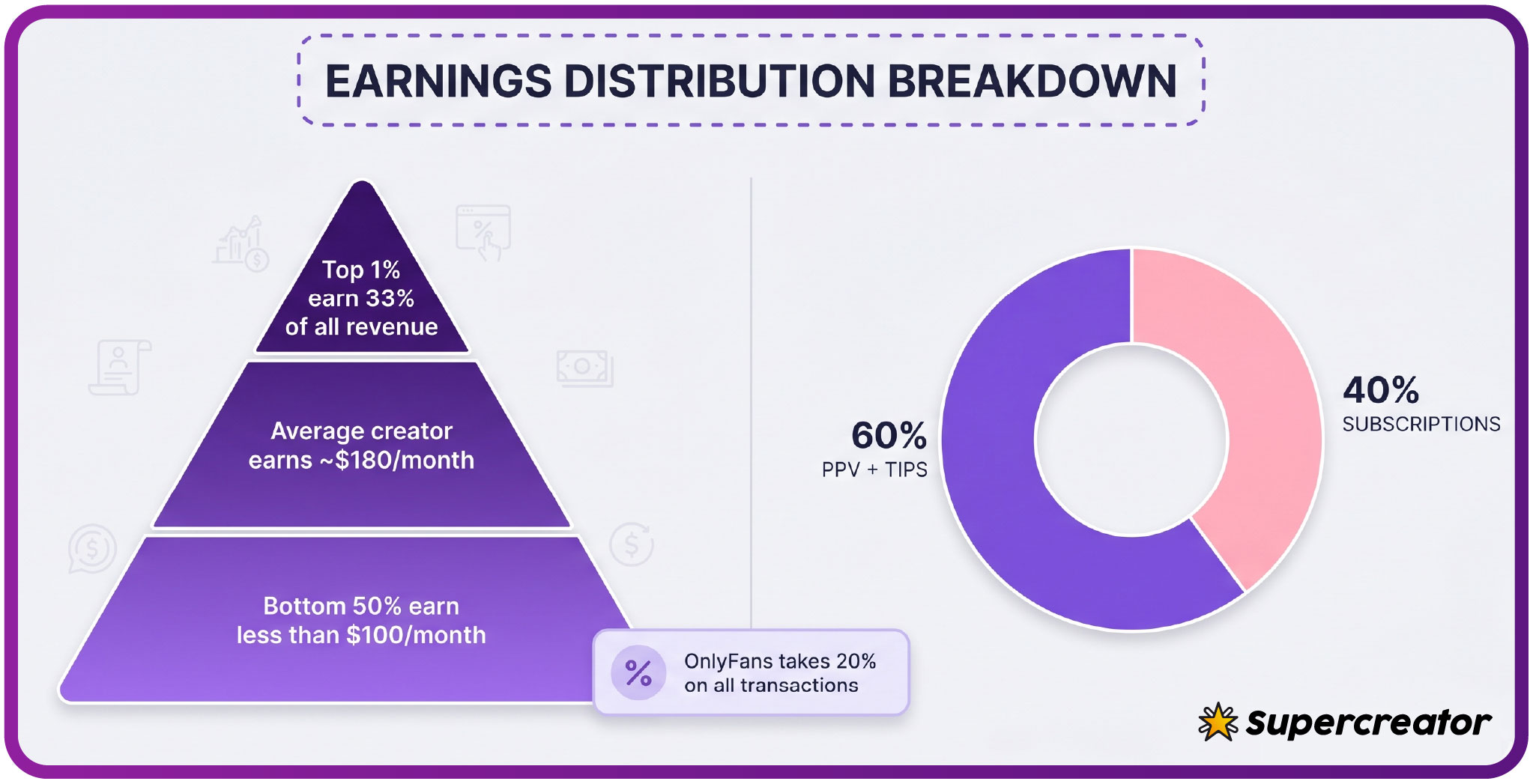
The 20% platform fee applies to everything, so a creator keeps 80%. That single fact reshapes every pricing decision. A $25 subscription returns $20. The relationship between effort and payout is not linear in the creator’s mind because the fee comes off the top before anything else.
- An enforced minimum price means “free” is a separate product, not a discount.
- A maximum cap prevents extreme exclusivity pricing above $49.99.
- The 20% platform fee reduces every payout to 80% of the sticker price.
- Promotional first months are allowed below $4.99; the base price is not.
- Currency display varies by region, so the same page shows different local figures.
Free pages sit outside this structure entirely. A creator sets the price to $0 and earns through PPV messages and tips instead. That is a different business model, not a cheaper version of a paid page, and judging a free page by subscription standards misses the point.

Content Investment Recovery and Break-Even Math
Before a creator sets a number, they usually ask what it costs to produce the page. Equipment, lighting, editing software, and the hours spent shooting and replying all have a price. A creator shooting on a phone with natural light has a lower floor than one renting studio space. Neither approach is wrong, but the cost structures produce different minimum viable prices.
- Equipment and production quality, from phone cameras to dedicated lighting and editing tools.
- Content type specialization, since some formats take far longer to produce per post.
- Posting frequency commitment, because daily output multiplies the time cost.
- Direct engagement time, since answering messages consumes hours that cannot be automated.
A creator posting daily with low equipment costs might break even at a handful of $5 subscribers. One producing high-production work twice a week might need a smaller number of $20 subscribers to reach the same point. The subscription count matters less than the total revenue against total hours.
Tip: when a creator publicly explains a price increase, read the reason carefully. A stated equipment upgrade or schedule change tells you what the money funds, which is more useful than the number alone.
Positioning Signals in the $5-$10 Cluster Versus Premium Tiers
Most paid pages land somewhere between $4.99 and $15, with the crowd clustering around $5 to $10. That density is not accidental. It is the zone where casual subscribers feel comfortable committing without deliberation, and where creators can accumulate volume rather than chase per-head revenue. Sitting near the minimum signals accessibility. Sitting above $15 signals that the creator expects a smaller, more committed audience.
Price is a communication tool whether or not the creator intends it that way. A $6.99 page tells you the creator wants steady subscriber turnover at low friction. A $29.99 page tells you they would rather have fifty loyal subscribers than five hundred casual ones. Neither is a quality statement.
| Price Position | Typical Creator Profile | Subscriber Expectation Alignment |
|---|---|---|
| $4.99-$7 (minimum-adjacent) | Volume-focused, frequent but shorter posts, often newer pages | Matches fans who want low-risk entry and accept variable output |
| $7-$12 (mid-cluster) | Established posting rhythm, moderate production, some paid extras | Matches fans expecting consistent updates without premium polish |
| $15+ (upper tier) | Niche specialization, higher production cost, fewer subscribers | Matches fans who value specific content over broad variety |
The mismatch usually appears when a subscriber reads the price as a quality guarantee. A $25 page is not automatically delivering five times the value of a $5 page. It is delivering a different ratio of exclusivity to volume, and that ratio may or may not suit you.
Promotional Pricing Psychology and First-Month Bait
Here the rules get interesting. A creator cannot set a base price below $4.99, but a promotional first month can legally drop below that line. A $3 first month is permitted. That creates a genuine gap between the advertised entry price and what you will pay on renewal, and subscribers who miss the distinction end up surprised.
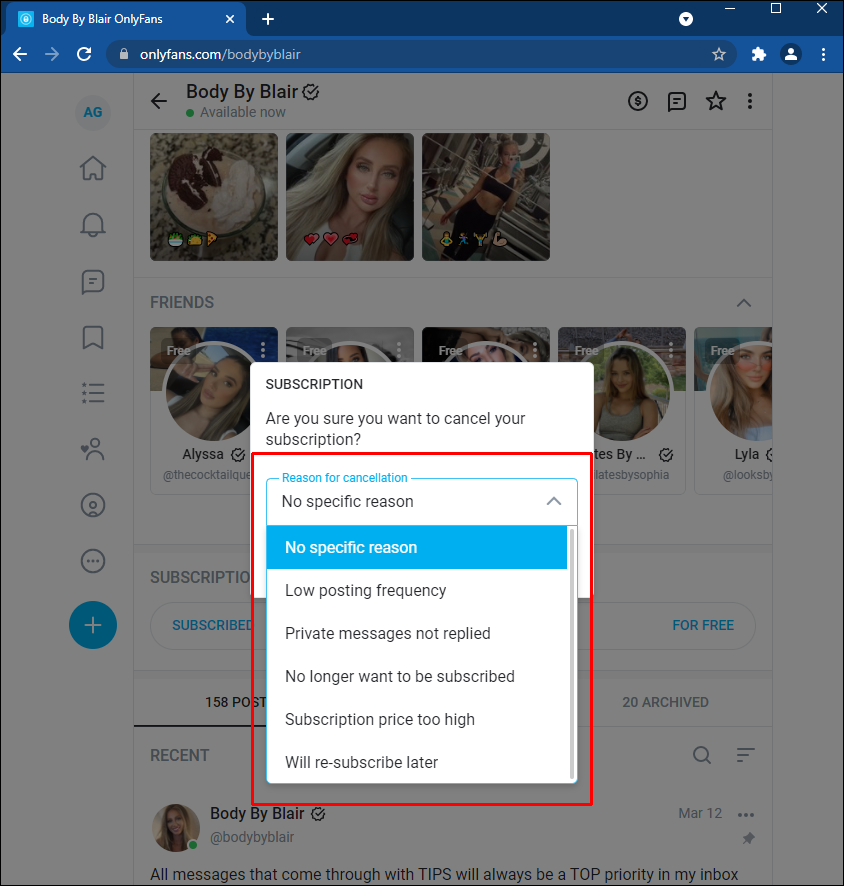
When the promotion ends, the base price resumes, and auto-renew charges the standard rate unless you cancel first.
| Promotion Type | Price Point Example | Post-Promotion Reality |
|---|---|---|
| Discounted first month | $3 for month one | Renews at the creator’s standard $4.99+ base price |
| Limited free trial | $0 for a short window | Converts to a paid base price when the trial closes |
| Bundled multi-month offer | Discounted rate across several months | Returns to standard pricing at the end of the bundle |
There is one detail worth memorizing. When a creator raises the base price, auto-renew stops for existing subscribers, and current access lasts until the paid period ends.
Subscriber Interpretation Errors and Expectation Mismatches
Price feels like a summary of everything inside the page, but it is only one number, chosen for reasons the subscriber never sees. Separating price from the specific expectations you attach to it prevents most of the disappointment.
- Assuming price predicts posting frequency, when the two are set independently.
- Equating a high price with included custom content, which often costs extra.
- Expecting minimum-priced pages to match premium production values.
- Reading a promotional price as permanent value rather than a temporary entry rate.
- Confusing a large follower count with an actual content output commitment.
A creator charging $9.99 might post five times a week or twice a month; the price does not tell you which.
The fix is comparison shopping within a category, not across the whole platform. Two pages at similar prices with similar posting patterns are a fair comparison. A $5 page and a $40 page are answering different questions, so ranking them against each other tells you almost nothing. If you want a faster way to browse pages that already align with your budget, a curated list of the best onlyfans value options narrows the field before you spend anything.
Cross-Referencing Price with Ranking Card Activity Metrics
External ranking sites exist because OnlyFans has no built-in discovery feed or directory. There is no search page, no category browser, no recommendation algorithm pushing pages at you. Ranking cards filled that vacuum, but a card is only as useful as the metrics it shows.
- Content update frequency indicators show whether posts arrive weekly or sporadically.
- Engagement ratio signals suggest how responsive the creator is to messages.
- Media count progression tracks whether the archive is growing or stalled.
- Promotional history depth reveals how often the creator discounts and how steeply.
The BestOnlyFans methodology weights these activity signals alongside price rather than treating the subscription cost as a headline number. Four pages at $9.99 can behave completely differently, and the activity data is what separates them. A card showing steady media growth with regular updates tells a different story than one showing a flat count behind the same price.
That is the practical use of a ranking card: not to declare a winner, but to compress several signals into a format you can scan in seconds. Combine it with the pricing logic above and you have both the number and the context behind it.
Negotiating the Price-Value Equation as a Selective Subscriber
The same $12 page can be excellent value for one subscriber and a waste for another, depending entirely on what each person wants. Personal valuation beats platform-wide comparison every time.
- Content type alignment, since a page producing your preferred format is worth more to you than a cheaper page that does not.
- Desired interaction level, because messaging access has real value if you use it.
- Budget allocation flexibility, so one subscription does not crowd out others you enjoy.
- Tolerance for additional PPV spending, since base price rarely covers everything.
- Temporal preference for archived versus fresh content, which changes how much a new subscription delivers immediately.
Budget for the extras before you commit. PPV messages unlock up to $50, paid chat commonly runs $3-$5 per message, and tips can reach $100. A $5 base subscription with active PPV can cost more per month than a $25 subscription with none. The base price is the entry fee, not the total bill.
One more note on payment friction: card verification places a temporary $0.10 hold that is refunded within days. It is not a charge, and it does not affect the value calculation.
FAQ
Why do some OnlyFans creators choose the minimum $4.99 price while others charge much more?
It reflects two different strategies. Minimum-adjacent pricing aims for volume, accepting lower revenue per subscriber in exchange for a larger audience. Production costs, posting frequency, and how much time the creator spends on messages all push the number up or down.
Does a higher subscription price generally mean I’ll see more content without extra PPV charges?
Base price and PPV are separate settings. A page at $29.99 may still send paid PPV messages, and a page at $4.99 may include everything in the subscription. Check the page description before assuming.
How can I tell if a creator’s promotional price reflects their actual content value?
Look past the promotional figure to the base price that resumes after it. A $3 first month renewing at $9.99 is a $9.99 page, not a $3 one. Compare the base price against the posting frequency and media count you can observe, then decide whether the standard rate matches your expectations.
What tools does BestOnlyFans provide to assess whether a price matches creator output?
Ranking cards combine price with activity metrics such as update frequency, engagement signals, and media count progression. That combination gives you a fuller picture than a price tag alone, so you can compare pages on output rather than cost in isolation.