RSS
aibo-europe.com
July 13, 2026
Uncategorized

Italian countryside Archives – Eva Milano

maximios
0 0 0
Share

Lovely view on the road of Gignano, Volterra, region of Tuscany, Italy.

“You may have the universe if I may have Italy.” is a wonderful quote by the great Giusepe Verdi. There’s such a large variety of gorgeous views, historical monuments and delicious dishes on the Boot, that a man really does not need much more. Italy isn’t a very big country, but its riches are infinite. Fortunately, you don’t need to go all the way from Lombardy to Calabria to fall in love with this country. Even a simple tour of Tuscany can charm you for life. The multitude of small towns, landed on the top of a hill, is possibly the loveliest thing about this region. Get ready for a journey back in time because even reading about those places can take you to the Middle Ages.

Towers of San Gimignano

San Gimignano, also known as “city of 100 towers” actually had just 72 during its zenith in the 14th century. Back then the town was growing substantially thanks to its strategic location on Via Francigena – the piligrimage road that leads from France to Rome. The towers were popping up one after another as the rich families in the town tried to prove their power by building the highest structure. The competition was fierce and soon enough the local government was forced to pass a law forbidding the building of any towers taller than its own – Torre Grossa. But some influential families accept this defeat. That is how the twin towers at Piazza delle Erbe were constructed – their combined height exceeds that any existing tower. Nowadays San Gimignano has only 14 towers left as the rest of them collapsed with time. But the town still has the fame of the “medieval Manhattan”.

The ice-cream at the renown Gelateria Dondoli are no less of an attraction. They are said to be the best in the world. This place is famous with the unique and untraditional flavor combinations such as: chaffrain and pine nuts, pink grapefruit and sparkling wine, Gorgonozola with walnuts, Ricotta with blueberries and spicy chocolate with sour cherry. Whether the ice-cream is the best or not – it’s a matter of taste. But the gelato is definitely worth-trying if you’d like to experiment with a few new flavours.

View from one of the towers of San Gimignano, Tuscany, Italy.

One thing is absolutely guaranteed – you will fall in love with this town. Go on top of any of the towers to get some spectacular views of San Gimignano and its surrounding area. If you’re still in the mood for something sweet, try pandforte – a dessert made with nuts and dried fruits. Having panforte is almost as traditional here as having a glass of wine!

Chatting with the loveliest locals of San Gimignano, right opposite of the Duomo

Insiders tip: If you want to meet some locals and dig deep into the history and traditions of this region, head straight to Piazza Duomo in the late afternoon. Right opposite of the cathedral you may find a large group of some elderly men sitting down. They’re incredibly friendly and will welcome you even if you speak little or no Italian!

Castle of Monteriggoni

Monteriggioni is a fairytale-like town, founded by the Republic of Siena in a strategic location in order to stop the armies of Florence. The castle wall was built back in the 13th century and it borders an almost perfect oval shape. Surprisingly, its shape was not purpose-made, the building just follows the natural typography of the hill. There’s one other interesting coincidence – the towers of the town are 14, too!

Monteriggioni was subject to numerous attacks but its city walls withstood even the most ferocious of them. The town was believed to be impregnable for centuries. A popular legend tells the story of the greedy captain Giovano Zeti who betrayed the town in 1554. He let inside the city walls a group of Florentine soldiers to ambush the Sienese army. That is how Monteriggioni fell under the rule of Florence. Reportedly, the ghost of Zeti was seen on many occasions, wandering these lands in search for forgiveness.

Presently, the stone fortification of Monteriggioni is still intact. It looks as if the time has stopped here and it would take you just a little bit of imagination to go back into the Dark Ages. If you visit the town in the beginning of July during the annual Medieval festival, you will literally immerse yourself in that historical period. Farmers, craftsmen, traders, monks, calaviers stroll down the streets of Monteriggioni. The chaos of music, dances, duels and acrobatic performances, mixed with the flavour of medieval food is truly enchanting.

Green hills of Tuscany

Travel through Tuscany is meant to be slow. Everything about this region is so astonishing that it’s only natural to stop and marvel. There are heaps of other towns that are worth a visit.  The gorgeous sunsets in Volterra and the superb Nutella ice-cream in Lucca are not to be missed. Besides, the views that you will enjoy travelling from one place to another are unforgettable.

Sunrise outside of Volterra

I still remember the blue-purple shade of the hills shrouded in fog, the purple skies and the fiery sun at sunrise. The thrill that you get when a rabbit or a deer randomly crosses your path is unexplicable!

Follow:

You may also enjoy:

  • Italian islands – Capri, Ischia and Procida

    Italian islands – Capri, Ischia and Procida

  • The small Lisbon and the big earthquake

    The small Lisbon and the big earthquake

  • Tasty walk around San Sebastian

    Tasty walk around San Sebastian

  • Charm hunting in Santander

    Charm hunting in Santander

July 13, 2026
Uncategorized

Medieval festival Archives – Eva Milano

maximios
0 0 0
Share

Lovely view on the road of Gignano, Volterra, region of Tuscany, Italy.

“You may have the universe if I may have Italy.” is a wonderful quote by the great Giusepe Verdi. There’s such a large variety of gorgeous views, historical monuments and delicious dishes on the Boot, that a man really does not need much more. Italy isn’t a very big country, but its riches are infinite. Fortunately, you don’t need to go all the way from Lombardy to Calabria to fall in love with this country. Even a simple tour of Tuscany can charm you for life. The multitude of small towns, landed on the top of a hill, is possibly the loveliest thing about this region. Get ready for a journey back in time because even reading about those places can take you to the Middle Ages.

Towers of San Gimignano

San Gimignano, also known as “city of 100 towers” actually had just 72 during its zenith in the 14th century. Back then the town was growing substantially thanks to its strategic location on Via Francigena – the piligrimage road that leads from France to Rome. The towers were popping up one after another as the rich families in the town tried to prove their power by building the highest structure. The competition was fierce and soon enough the local government was forced to pass a law forbidding the building of any towers taller than its own – Torre Grossa. But some influential families accept this defeat. That is how the twin towers at Piazza delle Erbe were constructed – their combined height exceeds that any existing tower. Nowadays San Gimignano has only 14 towers left as the rest of them collapsed with time. But the town still has the fame of the “medieval Manhattan”.

The ice-cream at the renown Gelateria Dondoli are no less of an attraction. They are said to be the best in the world. This place is famous with the unique and untraditional flavor combinations such as: chaffrain and pine nuts, pink grapefruit and sparkling wine, Gorgonozola with walnuts, Ricotta with blueberries and spicy chocolate with sour cherry. Whether the ice-cream is the best or not – it’s a matter of taste. But the gelato is definitely worth-trying if you’d like to experiment with a few new flavours.

View from one of the towers of San Gimignano, Tuscany, Italy.

One thing is absolutely guaranteed – you will fall in love with this town. Go on top of any of the towers to get some spectacular views of San Gimignano and its surrounding area. If you’re still in the mood for something sweet, try pandforte – a dessert made with nuts and dried fruits. Having panforte is almost as traditional here as having a glass of wine!

Chatting with the loveliest locals of San Gimignano, right opposite of the Duomo

Insiders tip: If you want to meet some locals and dig deep into the history and traditions of this region, head straight to Piazza Duomo in the late afternoon. Right opposite of the cathedral you may find a large group of some elderly men sitting down. They’re incredibly friendly and will welcome you even if you speak little or no Italian!

Castle of Monteriggoni

Monteriggioni is a fairytale-like town, founded by the Republic of Siena in a strategic location in order to stop the armies of Florence. The castle wall was built back in the 13th century and it borders an almost perfect oval shape. Surprisingly, its shape was not purpose-made, the building just follows the natural typography of the hill. There’s one other interesting coincidence – the towers of the town are 14, too!

Monteriggioni was subject to numerous attacks but its city walls withstood even the most ferocious of them. The town was believed to be impregnable for centuries. A popular legend tells the story of the greedy captain Giovano Zeti who betrayed the town in 1554. He let inside the city walls a group of Florentine soldiers to ambush the Sienese army. That is how Monteriggioni fell under the rule of Florence. Reportedly, the ghost of Zeti was seen on many occasions, wandering these lands in search for forgiveness.

Presently, the stone fortification of Monteriggioni is still intact. It looks as if the time has stopped here and it would take you just a little bit of imagination to go back into the Dark Ages. If you visit the town in the beginning of July during the annual Medieval festival, you will literally immerse yourself in that historical period. Farmers, craftsmen, traders, monks, calaviers stroll down the streets of Monteriggioni. The chaos of music, dances, duels and acrobatic performances, mixed with the flavour of medieval food is truly enchanting.

Green hills of Tuscany

Travel through Tuscany is meant to be slow. Everything about this region is so astonishing that it’s only natural to stop and marvel. There are heaps of other towns that are worth a visit.  The gorgeous sunsets in Volterra and the superb Nutella ice-cream in Lucca are not to be missed. Besides, the views that you will enjoy travelling from one place to another are unforgettable.

Sunrise outside of Volterra

I still remember the blue-purple shade of the hills shrouded in fog, the purple skies and the fiery sun at sunrise. The thrill that you get when a rabbit or a deer randomly crosses your path is unexplicable!

Follow:

You may also enjoy:

  • Volterra – the heart of Tuscany

    Volterra – the heart of Tuscany

  • Charm hunting in Santander

    Charm hunting in Santander

  • Italian islands – Capri, Ischia and Procida

    Italian islands – Capri, Ischia and Procida

  • The small Lisbon and the big earthquake

    The small Lisbon and the big earthquake

July 13, 2026
Uncategorized

Spain Archives – Eva Milano

maximios
0 0 0
Share

Spain bridges Europe and Africa, the Mediterranean Sea and the Atlantic Ocean. The territory of the country has been under the influence of many different cultures, each of them adding something to the traditional Spanish cuisine. Olives, oil and wine are a Roman heritage, cooking meat and fish is a Celtic one, the Arabs introduced honey, almonds, citrus fruits and spices like cumin and saffron. Spanish expeditions during the Age of Discovery brought various products from the New World – tomatoes, potatoes, corn, peppers and chocolate. Gradually these foods become a permanent part of Spanish dishes. Modern Spanish cuisine is delicious and diverse. But there are a few traditional courses that you absolutely need to taste.

Paella in Valencia

Paella Valenciana, Spanish cuisine

A popular urban myth claims that the Valencian mix of rice, vegetables, meat and seafood was created by a man who wanted to surprise his loved one with a home-made dinner. When he came back home, he realised that he had only leftovers. He quickly mixed all that he had in the fridge and presented the new dish to his lady. That is how the name paella was born: coming from the Spanish “para ella” that translates as “for her”.

The true story about how paella was born is not even remotely as romantic. The food was popular among servants who brought home the leftovers from the exquisite banquets of Moorish kings. The name comes from the Latin word for the pans in which paella was cooked.

Paella has a number of variations, depending on which region you are visiting. It could be vegetarian or served with meat and seafood. The key to the savoury taste of this dish lies in the use of onion and saffron.  Regardless of which type of paella you get to try, you will most definitely be impressed.

Tortilla in Pamplona

Tortilla de patatas, Spanish cuisine

Every year Pamplona attracts a number of visitors for the famous festival of San Fermín.  The celebration is known for the run of six fierce bulls down the cobbled streets of the town. The festival is very popular but far less beloved than the delicious tortilla de patatas of Pamplona.

This dish was used during the 19th century as a simple, cheap and easy way to feed the Spanish army. The potato omelet is a staple in most bars around the country. Some world-class chefs have developed their own recipes inspired by Spanish tortilla. The original, however, is still a classic that you should not miss.

Gazpacho in Andalucia

Gazpacho andaluz, Spanish cuisine

Gazpacho is a cold tomato soup from Andalucia, the most southern region of Spain. Firstly, the cream soup was made with bread, olive oil, vinegar and garlic. In the different places the dish had variations including local vegetables or almonds. When Columbus brought tomatoes, cucumbers and peppers from his travels, the recipe got modified to what we know today.

A popular Spanish refrain says “You can never have too much gazpacho”. Taste this refreshing soup and you will surely agree!

Pintxos in the Basque country

Pintxos, San Sebastian, Spanish cuisine

You have probably heard of tapas – food bites that usually “accompany” your beer n typical Spanish bars. In the past people used a piece of bread topped with hamón to protect their drink from dust and insects. Nowadays tapas are not so practical but a lot more diversified and surprisingly appetizing.

What are pintxos? Well, more or less the same as tapas just better because they are made in the Basque country in the North of Spain. This region boasts with flavourful food thanks to the high quality products that are produced locally. San Sebastian is one of the most touristic places in this part of the country. The city is literally laden with pintxos bars, each one of them offering a vertiginous range of tastes.

Chocolate con churros in Madrid

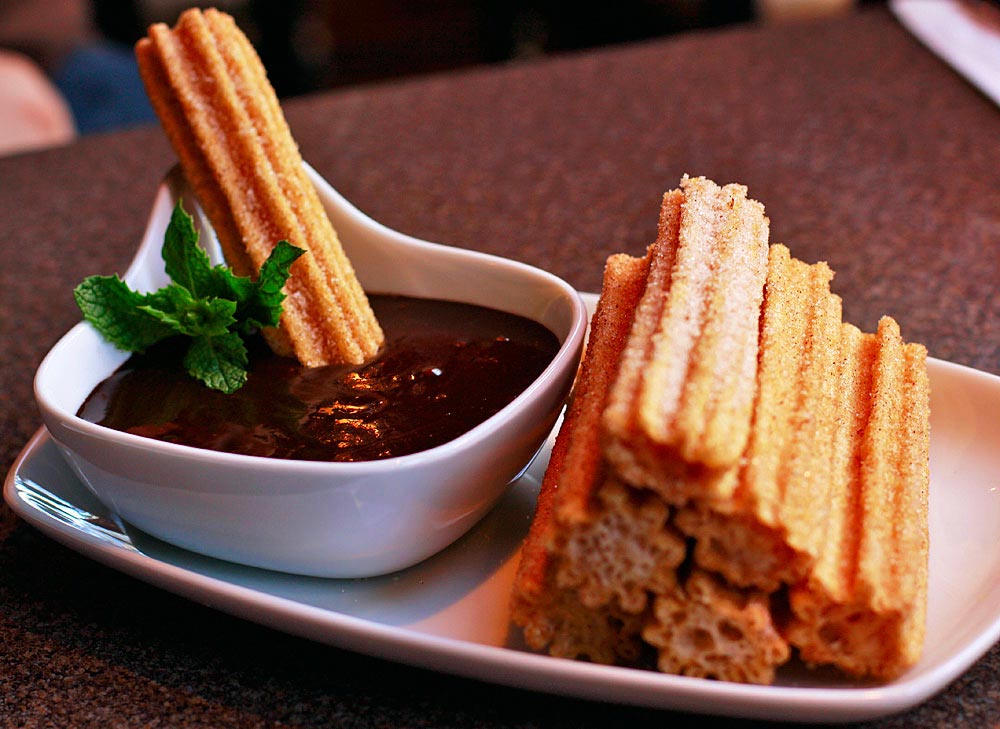
Chocolate con churros, Spanish cuisine

Photo by Waferboard on Flickr, Curves correction by me

For dessert I want to offer you one of those sugarcoated temptations that are not to everyone’s taste but are still a must-try. Fried sweet bread served with hot chocolate is one of the most common breakfast meals in Spain, especially in Madrid. The origin of churros is a culinary mystery. Some claim that the recipe was brought to the Iberian Peninsula by the Portuguese who travelled to Asia. There is a similar food in the North of China known as “youtiao”. Others say that churros were first made by shepherds who wanted to prepare something indulgent and easy. The authenticity of this version is supported by the existence of a sheep breed Churra.

Churros and chocolate were first combined in the 19thcentury and haven’t stopped to impress foodies ever since. To my taste street churros are too greasy and not sweet enough. But the home-made bread sticks rolled in brown sugar and cinnamon are a whole another thing. Nevertheless, I am yet to meet someone else who has not fallen in love with churros from the first taste. That is why it is imperative to try them. To top it all, churros in Latin America are filled with chocolate, dulce de leche, cheese or even guava!

Spanish cuisine is colourful and diversified. You should seriously consider a gastronomic trip through all 17 regions of the country. Each one offers dishes to impress. If you love good food, check out my list of the best from Italian cuisine.

Follow:

You may also enjoy:

  • Chocolate Christmas biscuits

    Chocolate Christmas biscuits

  • Vegan breakfast smoothie: Spinach delight

    Vegan breakfast smoothie: Spinach delight

  • Spanish tortilla – simple and tasty

    Spanish tortilla – simple and tasty

  • The best of Italian cuisine

    The best of Italian cuisine

July 13, 2026
Uncategorized

Spanish food Archives – Eva Milano

maximios
0 0 0
Share

Spain bridges Europe and Africa, the Mediterranean Sea and the Atlantic Ocean. The territory of the country has been under the influence of many different cultures, each of them adding something to the traditional Spanish cuisine. Olives, oil and wine are a Roman heritage, cooking meat and fish is a Celtic one, the Arabs introduced honey, almonds, citrus fruits and spices like cumin and saffron. Spanish expeditions during the Age of Discovery brought various products from the New World – tomatoes, potatoes, corn, peppers and chocolate. Gradually these foods become a permanent part of Spanish dishes. Modern Spanish cuisine is delicious and diverse. But there are a few traditional courses that you absolutely need to taste.

Paella in Valencia

Paella Valenciana, Spanish cuisine

A popular urban myth claims that the Valencian mix of rice, vegetables, meat and seafood was created by a man who wanted to surprise his loved one with a home-made dinner. When he came back home, he realised that he had only leftovers. He quickly mixed all that he had in the fridge and presented the new dish to his lady. That is how the name paella was born: coming from the Spanish “para ella” that translates as “for her”.

The true story about how paella was born is not even remotely as romantic. The food was popular among servants who brought home the leftovers from the exquisite banquets of Moorish kings. The name comes from the Latin word for the pans in which paella was cooked.

Paella has a number of variations, depending on which region you are visiting. It could be vegetarian or served with meat and seafood. The key to the savoury taste of this dish lies in the use of onion and saffron.  Regardless of which type of paella you get to try, you will most definitely be impressed.

Tortilla in Pamplona

Tortilla de patatas, Spanish cuisine

Every year Pamplona attracts a number of visitors for the famous festival of San Fermín.  The celebration is known for the run of six fierce bulls down the cobbled streets of the town. The festival is very popular but far less beloved than the delicious tortilla de patatas of Pamplona.

This dish was used during the 19th century as a simple, cheap and easy way to feed the Spanish army. The potato omelet is a staple in most bars around the country. Some world-class chefs have developed their own recipes inspired by Spanish tortilla. The original, however, is still a classic that you should not miss.

Gazpacho in Andalucia

Gazpacho andaluz, Spanish cuisine

Gazpacho is a cold tomato soup from Andalucia, the most southern region of Spain. Firstly, the cream soup was made with bread, olive oil, vinegar and garlic. In the different places the dish had variations including local vegetables or almonds. When Columbus brought tomatoes, cucumbers and peppers from his travels, the recipe got modified to what we know today.

A popular Spanish refrain says “You can never have too much gazpacho”. Taste this refreshing soup and you will surely agree!

Pintxos in the Basque country

Pintxos, San Sebastian, Spanish cuisine

You have probably heard of tapas – food bites that usually “accompany” your beer n typical Spanish bars. In the past people used a piece of bread topped with hamón to protect their drink from dust and insects. Nowadays tapas are not so practical but a lot more diversified and surprisingly appetizing.

What are pintxos? Well, more or less the same as tapas just better because they are made in the Basque country in the North of Spain. This region boasts with flavourful food thanks to the high quality products that are produced locally. San Sebastian is one of the most touristic places in this part of the country. The city is literally laden with pintxos bars, each one of them offering a vertiginous range of tastes.

Chocolate con churros in Madrid

Chocolate con churros, Spanish cuisine

Photo by Waferboard on Flickr, Curves correction by me

For dessert I want to offer you one of those sugarcoated temptations that are not to everyone’s taste but are still a must-try. Fried sweet bread served with hot chocolate is one of the most common breakfast meals in Spain, especially in Madrid. The origin of churros is a culinary mystery. Some claim that the recipe was brought to the Iberian Peninsula by the Portuguese who travelled to Asia. There is a similar food in the North of China known as “youtiao”. Others say that churros were first made by shepherds who wanted to prepare something indulgent and easy. The authenticity of this version is supported by the existence of a sheep breed Churra.

Churros and chocolate were first combined in the 19thcentury and haven’t stopped to impress foodies ever since. To my taste street churros are too greasy and not sweet enough. But the home-made bread sticks rolled in brown sugar and cinnamon are a whole another thing. Nevertheless, I am yet to meet someone else who has not fallen in love with churros from the first taste. That is why it is imperative to try them. To top it all, churros in Latin America are filled with chocolate, dulce de leche, cheese or even guava!

Spanish cuisine is colourful and diversified. You should seriously consider a gastronomic trip through all 17 regions of the country. Each one offers dishes to impress. If you love good food, check out my list of the best from Italian cuisine.

Follow:

You may also enjoy:

  • Spanish tortilla – simple and tasty

    Spanish tortilla – simple and tasty

  • Pizza Margherita with einkorn flour

    Pizza Margherita with einkorn flour

  • Three Spanish recipes with tomato

    Three Spanish recipes with tomato

  • Chocolate Christmas biscuits

    Chocolate Christmas biscuits

July 13, 2026
Uncategorized

churros Archives – Eva Milano

maximios
0 0 0
Share

Spain bridges Europe and Africa, the Mediterranean Sea and the Atlantic Ocean. The territory of the country has been under the influence of many different cultures, each of them adding something to the traditional Spanish cuisine. Olives, oil and wine are a Roman heritage, cooking meat and fish is a Celtic one, the Arabs introduced honey, almonds, citrus fruits and spices like cumin and saffron. Spanish expeditions during the Age of Discovery brought various products from the New World – tomatoes, potatoes, corn, peppers and chocolate. Gradually these foods become a permanent part of Spanish dishes. Modern Spanish cuisine is delicious and diverse. But there are a few traditional courses that you absolutely need to taste.

Paella in Valencia

Paella Valenciana, Spanish cuisine

A popular urban myth claims that the Valencian mix of rice, vegetables, meat and seafood was created by a man who wanted to surprise his loved one with a home-made dinner. When he came back home, he realised that he had only leftovers. He quickly mixed all that he had in the fridge and presented the new dish to his lady. That is how the name paella was born: coming from the Spanish “para ella” that translates as “for her”.

The true story about how paella was born is not even remotely as romantic. The food was popular among servants who brought home the leftovers from the exquisite banquets of Moorish kings. The name comes from the Latin word for the pans in which paella was cooked.

Paella has a number of variations, depending on which region you are visiting. It could be vegetarian or served with meat and seafood. The key to the savoury taste of this dish lies in the use of onion and saffron.  Regardless of which type of paella you get to try, you will most definitely be impressed.

Tortilla in Pamplona

Tortilla de patatas, Spanish cuisine

Every year Pamplona attracts a number of visitors for the famous festival of San Fermín.  The celebration is known for the run of six fierce bulls down the cobbled streets of the town. The festival is very popular but far less beloved than the delicious tortilla de patatas of Pamplona.

This dish was used during the 19th century as a simple, cheap and easy way to feed the Spanish army. The potato omelet is a staple in most bars around the country. Some world-class chefs have developed their own recipes inspired by Spanish tortilla. The original, however, is still a classic that you should not miss.

Gazpacho in Andalucia

Gazpacho andaluz, Spanish cuisine

Gazpacho is a cold tomato soup from Andalucia, the most southern region of Spain. Firstly, the cream soup was made with bread, olive oil, vinegar and garlic. In the different places the dish had variations including local vegetables or almonds. When Columbus brought tomatoes, cucumbers and peppers from his travels, the recipe got modified to what we know today.

A popular Spanish refrain says “You can never have too much gazpacho”. Taste this refreshing soup and you will surely agree!

Pintxos in the Basque country

Pintxos, San Sebastian, Spanish cuisine

You have probably heard of tapas – food bites that usually “accompany” your beer n typical Spanish bars. In the past people used a piece of bread topped with hamón to protect their drink from dust and insects. Nowadays tapas are not so practical but a lot more diversified and surprisingly appetizing.

What are pintxos? Well, more or less the same as tapas just better because they are made in the Basque country in the North of Spain. This region boasts with flavourful food thanks to the high quality products that are produced locally. San Sebastian is one of the most touristic places in this part of the country. The city is literally laden with pintxos bars, each one of them offering a vertiginous range of tastes.

Chocolate con churros in Madrid

Chocolate con churros, Spanish cuisine

Photo by Waferboard on Flickr, Curves correction by me

For dessert I want to offer you one of those sugarcoated temptations that are not to everyone’s taste but are still a must-try. Fried sweet bread served with hot chocolate is one of the most common breakfast meals in Spain, especially in Madrid. The origin of churros is a culinary mystery. Some claim that the recipe was brought to the Iberian Peninsula by the Portuguese who travelled to Asia. There is a similar food in the North of China known as “youtiao”. Others say that churros were first made by shepherds who wanted to prepare something indulgent and easy. The authenticity of this version is supported by the existence of a sheep breed Churra.

Churros and chocolate were first combined in the 19thcentury and haven’t stopped to impress foodies ever since. To my taste street churros are too greasy and not sweet enough. But the home-made bread sticks rolled in brown sugar and cinnamon are a whole another thing. Nevertheless, I am yet to meet someone else who has not fallen in love with churros from the first taste. That is why it is imperative to try them. To top it all, churros in Latin America are filled with chocolate, dulce de leche, cheese or even guava!

Spanish cuisine is colourful and diversified. You should seriously consider a gastronomic trip through all 17 regions of the country. Each one offers dishes to impress. If you love good food, check out my list of the best from Italian cuisine.

Follow:

You may also enjoy:

  • Three Spanish recipes with tomato

    Three Spanish recipes with tomato

  • Chocolate Christmas biscuits

    Chocolate Christmas biscuits

  • Pizza Margherita with einkorn flour

    Pizza Margherita with einkorn flour

  • Spanish tortilla – simple and tasty

    Spanish tortilla – simple and tasty

July 13, 2026
Uncategorized

tortilla Archives – Eva Milano

maximios
0 0 0
Share

Spain bridges Europe and Africa, the Mediterranean Sea and the Atlantic Ocean. The territory of the country has been under the influence of many different cultures, each of them adding something to the traditional Spanish cuisine. Olives, oil and wine are a Roman heritage, cooking meat and fish is a Celtic one, the Arabs introduced honey, almonds, citrus fruits and spices like cumin and saffron. Spanish expeditions during the Age of Discovery brought various products from the New World – tomatoes, potatoes, corn, peppers and chocolate. Gradually these foods become a permanent part of Spanish dishes. Modern Spanish cuisine is delicious and diverse. But there are a few traditional courses that you absolutely need to taste.

Paella in Valencia

Paella Valenciana, Spanish cuisine

A popular urban myth claims that the Valencian mix of rice, vegetables, meat and seafood was created by a man who wanted to surprise his loved one with a home-made dinner. When he came back home, he realised that he had only leftovers. He quickly mixed all that he had in the fridge and presented the new dish to his lady. That is how the name paella was born: coming from the Spanish “para ella” that translates as “for her”.

The true story about how paella was born is not even remotely as romantic. The food was popular among servants who brought home the leftovers from the exquisite banquets of Moorish kings. The name comes from the Latin word for the pans in which paella was cooked.

Paella has a number of variations, depending on which region you are visiting. It could be vegetarian or served with meat and seafood. The key to the savoury taste of this dish lies in the use of onion and saffron.  Regardless of which type of paella you get to try, you will most definitely be impressed.

Tortilla in Pamplona

Tortilla de patatas, Spanish cuisine

Every year Pamplona attracts a number of visitors for the famous festival of San Fermín.  The celebration is known for the run of six fierce bulls down the cobbled streets of the town. The festival is very popular but far less beloved than the delicious tortilla de patatas of Pamplona.

This dish was used during the 19th century as a simple, cheap and easy way to feed the Spanish army. The potato omelet is a staple in most bars around the country. Some world-class chefs have developed their own recipes inspired by Spanish tortilla. The original, however, is still a classic that you should not miss.

Gazpacho in Andalucia

Gazpacho andaluz, Spanish cuisine

Gazpacho is a cold tomato soup from Andalucia, the most southern region of Spain. Firstly, the cream soup was made with bread, olive oil, vinegar and garlic. In the different places the dish had variations including local vegetables or almonds. When Columbus brought tomatoes, cucumbers and peppers from his travels, the recipe got modified to what we know today.

A popular Spanish refrain says “You can never have too much gazpacho”. Taste this refreshing soup and you will surely agree!

Pintxos in the Basque country

Pintxos, San Sebastian, Spanish cuisine

You have probably heard of tapas – food bites that usually “accompany” your beer n typical Spanish bars. In the past people used a piece of bread topped with hamón to protect their drink from dust and insects. Nowadays tapas are not so practical but a lot more diversified and surprisingly appetizing.

What are pintxos? Well, more or less the same as tapas just better because they are made in the Basque country in the North of Spain. This region boasts with flavourful food thanks to the high quality products that are produced locally. San Sebastian is one of the most touristic places in this part of the country. The city is literally laden with pintxos bars, each one of them offering a vertiginous range of tastes.

Chocolate con churros in Madrid

Chocolate con churros, Spanish cuisine

Photo by Waferboard on Flickr, Curves correction by me

For dessert I want to offer you one of those sugarcoated temptations that are not to everyone’s taste but are still a must-try. Fried sweet bread served with hot chocolate is one of the most common breakfast meals in Spain, especially in Madrid. The origin of churros is a culinary mystery. Some claim that the recipe was brought to the Iberian Peninsula by the Portuguese who travelled to Asia. There is a similar food in the North of China known as “youtiao”. Others say that churros were first made by shepherds who wanted to prepare something indulgent and easy. The authenticity of this version is supported by the existence of a sheep breed Churra.

Churros and chocolate were first combined in the 19thcentury and haven’t stopped to impress foodies ever since. To my taste street churros are too greasy and not sweet enough. But the home-made bread sticks rolled in brown sugar and cinnamon are a whole another thing. Nevertheless, I am yet to meet someone else who has not fallen in love with churros from the first taste. That is why it is imperative to try them. To top it all, churros in Latin America are filled with chocolate, dulce de leche, cheese or even guava!

Spanish cuisine is colourful and diversified. You should seriously consider a gastronomic trip through all 17 regions of the country. Each one offers dishes to impress. If you love good food, check out my list of the best from Italian cuisine.

Follow:

You may also enjoy:

  • Spanish tortilla – simple and tasty

    Spanish tortilla – simple and tasty

  • Chocolate Christmas biscuits

    Chocolate Christmas biscuits

  • Vegan breakfast smoothie: Spinach delight

    Vegan breakfast smoothie: Spinach delight

  • Three Spanish recipes with tomato

    Three Spanish recipes with tomato

July 13, 2026
Uncategorized

tortilla de patatas Archives – Eva Milano

maximios
0 0 0
Share

Spain bridges Europe and Africa, the Mediterranean Sea and the Atlantic Ocean. The territory of the country has been under the influence of many different cultures, each of them adding something to the traditional Spanish cuisine. Olives, oil and wine are a Roman heritage, cooking meat and fish is a Celtic one, the Arabs introduced honey, almonds, citrus fruits and spices like cumin and saffron. Spanish expeditions during the Age of Discovery brought various products from the New World – tomatoes, potatoes, corn, peppers and chocolate. Gradually these foods become a permanent part of Spanish dishes. Modern Spanish cuisine is delicious and diverse. But there are a few traditional courses that you absolutely need to taste.

Paella in Valencia

Paella Valenciana, Spanish cuisine

A popular urban myth claims that the Valencian mix of rice, vegetables, meat and seafood was created by a man who wanted to surprise his loved one with a home-made dinner. When he came back home, he realised that he had only leftovers. He quickly mixed all that he had in the fridge and presented the new dish to his lady. That is how the name paella was born: coming from the Spanish “para ella” that translates as “for her”.

The true story about how paella was born is not even remotely as romantic. The food was popular among servants who brought home the leftovers from the exquisite banquets of Moorish kings. The name comes from the Latin word for the pans in which paella was cooked.

Paella has a number of variations, depending on which region you are visiting. It could be vegetarian or served with meat and seafood. The key to the savoury taste of this dish lies in the use of onion and saffron.  Regardless of which type of paella you get to try, you will most definitely be impressed.

Tortilla in Pamplona

Tortilla de patatas, Spanish cuisine

Every year Pamplona attracts a number of visitors for the famous festival of San Fermín.  The celebration is known for the run of six fierce bulls down the cobbled streets of the town. The festival is very popular but far less beloved than the delicious tortilla de patatas of Pamplona.

This dish was used during the 19th century as a simple, cheap and easy way to feed the Spanish army. The potato omelet is a staple in most bars around the country. Some world-class chefs have developed their own recipes inspired by Spanish tortilla. The original, however, is still a classic that you should not miss.

Gazpacho in Andalucia

Gazpacho andaluz, Spanish cuisine

Gazpacho is a cold tomato soup from Andalucia, the most southern region of Spain. Firstly, the cream soup was made with bread, olive oil, vinegar and garlic. In the different places the dish had variations including local vegetables or almonds. When Columbus brought tomatoes, cucumbers and peppers from his travels, the recipe got modified to what we know today.

A popular Spanish refrain says “You can never have too much gazpacho”. Taste this refreshing soup and you will surely agree!

Pintxos in the Basque country

Pintxos, San Sebastian, Spanish cuisine

You have probably heard of tapas – food bites that usually “accompany” your beer n typical Spanish bars. In the past people used a piece of bread topped with hamón to protect their drink from dust and insects. Nowadays tapas are not so practical but a lot more diversified and surprisingly appetizing.

What are pintxos? Well, more or less the same as tapas just better because they are made in the Basque country in the North of Spain. This region boasts with flavourful food thanks to the high quality products that are produced locally. San Sebastian is one of the most touristic places in this part of the country. The city is literally laden with pintxos bars, each one of them offering a vertiginous range of tastes.

Chocolate con churros in Madrid

Chocolate con churros, Spanish cuisine

Photo by Waferboard on Flickr, Curves correction by me

For dessert I want to offer you one of those sugarcoated temptations that are not to everyone’s taste but are still a must-try. Fried sweet bread served with hot chocolate is one of the most common breakfast meals in Spain, especially in Madrid. The origin of churros is a culinary mystery. Some claim that the recipe was brought to the Iberian Peninsula by the Portuguese who travelled to Asia. There is a similar food in the North of China known as “youtiao”. Others say that churros were first made by shepherds who wanted to prepare something indulgent and easy. The authenticity of this version is supported by the existence of a sheep breed Churra.

Churros and chocolate were first combined in the 19thcentury and haven’t stopped to impress foodies ever since. To my taste street churros are too greasy and not sweet enough. But the home-made bread sticks rolled in brown sugar and cinnamon are a whole another thing. Nevertheless, I am yet to meet someone else who has not fallen in love with churros from the first taste. That is why it is imperative to try them. To top it all, churros in Latin America are filled with chocolate, dulce de leche, cheese or even guava!

Spanish cuisine is colourful and diversified. You should seriously consider a gastronomic trip through all 17 regions of the country. Each one offers dishes to impress. If you love good food, check out my list of the best from Italian cuisine.

Follow:

You may also enjoy:

  • The best of Italian cuisine

    The best of Italian cuisine

  • Three Spanish recipes with tomato

    Three Spanish recipes with tomato

  • Chocolate Christmas biscuits

    Chocolate Christmas biscuits

  • Spanish tortilla – simple and tasty

    Spanish tortilla – simple and tasty

July 13, 2026
Uncategorized

pintxos Archives – Eva Milano

maximios
0 0 0
Share

Spain bridges Europe and Africa, the Mediterranean Sea and the Atlantic Ocean. The territory of the country has been under the influence of many different cultures, each of them adding something to the traditional Spanish cuisine. Olives, oil and wine are a Roman heritage, cooking meat and fish is a Celtic one, the Arabs introduced honey, almonds, citrus fruits and spices like cumin and saffron. Spanish expeditions during the Age of Discovery brought various products from the New World – tomatoes, potatoes, corn, peppers and chocolate. Gradually these foods become a permanent part of Spanish dishes. Modern Spanish cuisine is delicious and diverse. But there are a few traditional courses that you absolutely need to taste.

Paella in Valencia

Paella Valenciana, Spanish cuisine

A popular urban myth claims that the Valencian mix of rice, vegetables, meat and seafood was created by a man who wanted to surprise his loved one with a home-made dinner. When he came back home, he realised that he had only leftovers. He quickly mixed all that he had in the fridge and presented the new dish to his lady. That is how the name paella was born: coming from the Spanish “para ella” that translates as “for her”.

The true story about how paella was born is not even remotely as romantic. The food was popular among servants who brought home the leftovers from the exquisite banquets of Moorish kings. The name comes from the Latin word for the pans in which paella was cooked.

Paella has a number of variations, depending on which region you are visiting. It could be vegetarian or served with meat and seafood. The key to the savoury taste of this dish lies in the use of onion and saffron.  Regardless of which type of paella you get to try, you will most definitely be impressed.

Tortilla in Pamplona

Tortilla de patatas, Spanish cuisine

Every year Pamplona attracts a number of visitors for the famous festival of San Fermín.  The celebration is known for the run of six fierce bulls down the cobbled streets of the town. The festival is very popular but far less beloved than the delicious tortilla de patatas of Pamplona.

This dish was used during the 19th century as a simple, cheap and easy way to feed the Spanish army. The potato omelet is a staple in most bars around the country. Some world-class chefs have developed their own recipes inspired by Spanish tortilla. The original, however, is still a classic that you should not miss.

Gazpacho in Andalucia

Gazpacho andaluz, Spanish cuisine

Gazpacho is a cold tomato soup from Andalucia, the most southern region of Spain. Firstly, the cream soup was made with bread, olive oil, vinegar and garlic. In the different places the dish had variations including local vegetables or almonds. When Columbus brought tomatoes, cucumbers and peppers from his travels, the recipe got modified to what we know today.

A popular Spanish refrain says “You can never have too much gazpacho”. Taste this refreshing soup and you will surely agree!

Pintxos in the Basque country

Pintxos, San Sebastian, Spanish cuisine

You have probably heard of tapas – food bites that usually “accompany” your beer n typical Spanish bars. In the past people used a piece of bread topped with hamón to protect their drink from dust and insects. Nowadays tapas are not so practical but a lot more diversified and surprisingly appetizing.

What are pintxos? Well, more or less the same as tapas just better because they are made in the Basque country in the North of Spain. This region boasts with flavourful food thanks to the high quality products that are produced locally. San Sebastian is one of the most touristic places in this part of the country. The city is literally laden with pintxos bars, each one of them offering a vertiginous range of tastes.

Chocolate con churros in Madrid

Chocolate con churros, Spanish cuisine

Photo by Waferboard on Flickr, Curves correction by me

For dessert I want to offer you one of those sugarcoated temptations that are not to everyone’s taste but are still a must-try. Fried sweet bread served with hot chocolate is one of the most common breakfast meals in Spain, especially in Madrid. The origin of churros is a culinary mystery. Some claim that the recipe was brought to the Iberian Peninsula by the Portuguese who travelled to Asia. There is a similar food in the North of China known as “youtiao”. Others say that churros were first made by shepherds who wanted to prepare something indulgent and easy. The authenticity of this version is supported by the existence of a sheep breed Churra.

Churros and chocolate were first combined in the 19thcentury and haven’t stopped to impress foodies ever since. To my taste street churros are too greasy and not sweet enough. But the home-made bread sticks rolled in brown sugar and cinnamon are a whole another thing. Nevertheless, I am yet to meet someone else who has not fallen in love with churros from the first taste. That is why it is imperative to try them. To top it all, churros in Latin America are filled with chocolate, dulce de leche, cheese or even guava!

Spanish cuisine is colourful and diversified. You should seriously consider a gastronomic trip through all 17 regions of the country. Each one offers dishes to impress. If you love good food, check out my list of the best from Italian cuisine.

Follow:

You may also enjoy:

  • Pizza Margherita with einkorn flour

    Pizza Margherita with einkorn flour

  • Chocolate Christmas biscuits

    Chocolate Christmas biscuits

  • Three Spanish recipes with tomato

    Three Spanish recipes with tomato

  • Spanish tortilla – simple and tasty

    Spanish tortilla – simple and tasty

July 13, 2026
Uncategorized

gazpacho Andaluz Archives – Eva Milano

maximios
0 0 0
Share

Spain bridges Europe and Africa, the Mediterranean Sea and the Atlantic Ocean. The territory of the country has been under the influence of many different cultures, each of them adding something to the traditional Spanish cuisine. Olives, oil and wine are a Roman heritage, cooking meat and fish is a Celtic one, the Arabs introduced honey, almonds, citrus fruits and spices like cumin and saffron. Spanish expeditions during the Age of Discovery brought various products from the New World – tomatoes, potatoes, corn, peppers and chocolate. Gradually these foods become a permanent part of Spanish dishes. Modern Spanish cuisine is delicious and diverse. But there are a few traditional courses that you absolutely need to taste.

Paella in Valencia

Paella Valenciana, Spanish cuisine

A popular urban myth claims that the Valencian mix of rice, vegetables, meat and seafood was created by a man who wanted to surprise his loved one with a home-made dinner. When he came back home, he realised that he had only leftovers. He quickly mixed all that he had in the fridge and presented the new dish to his lady. That is how the name paella was born: coming from the Spanish “para ella” that translates as “for her”.

The true story about how paella was born is not even remotely as romantic. The food was popular among servants who brought home the leftovers from the exquisite banquets of Moorish kings. The name comes from the Latin word for the pans in which paella was cooked.

Paella has a number of variations, depending on which region you are visiting. It could be vegetarian or served with meat and seafood. The key to the savoury taste of this dish lies in the use of onion and saffron.  Regardless of which type of paella you get to try, you will most definitely be impressed.

Tortilla in Pamplona

Tortilla de patatas, Spanish cuisine

Every year Pamplona attracts a number of visitors for the famous festival of San Fermín.  The celebration is known for the run of six fierce bulls down the cobbled streets of the town. The festival is very popular but far less beloved than the delicious tortilla de patatas of Pamplona.

This dish was used during the 19th century as a simple, cheap and easy way to feed the Spanish army. The potato omelet is a staple in most bars around the country. Some world-class chefs have developed their own recipes inspired by Spanish tortilla. The original, however, is still a classic that you should not miss.

Gazpacho in Andalucia

Gazpacho andaluz, Spanish cuisine

Gazpacho is a cold tomato soup from Andalucia, the most southern region of Spain. Firstly, the cream soup was made with bread, olive oil, vinegar and garlic. In the different places the dish had variations including local vegetables or almonds. When Columbus brought tomatoes, cucumbers and peppers from his travels, the recipe got modified to what we know today.

A popular Spanish refrain says “You can never have too much gazpacho”. Taste this refreshing soup and you will surely agree!

Pintxos in the Basque country

Pintxos, San Sebastian, Spanish cuisine

You have probably heard of tapas – food bites that usually “accompany” your beer n typical Spanish bars. In the past people used a piece of bread topped with hamón to protect their drink from dust and insects. Nowadays tapas are not so practical but a lot more diversified and surprisingly appetizing.

What are pintxos? Well, more or less the same as tapas just better because they are made in the Basque country in the North of Spain. This region boasts with flavourful food thanks to the high quality products that are produced locally. San Sebastian is one of the most touristic places in this part of the country. The city is literally laden with pintxos bars, each one of them offering a vertiginous range of tastes.

Chocolate con churros in Madrid

Chocolate con churros, Spanish cuisine

Photo by Waferboard on Flickr, Curves correction by me

For dessert I want to offer you one of those sugarcoated temptations that are not to everyone’s taste but are still a must-try. Fried sweet bread served with hot chocolate is one of the most common breakfast meals in Spain, especially in Madrid. The origin of churros is a culinary mystery. Some claim that the recipe was brought to the Iberian Peninsula by the Portuguese who travelled to Asia. There is a similar food in the North of China known as “youtiao”. Others say that churros were first made by shepherds who wanted to prepare something indulgent and easy. The authenticity of this version is supported by the existence of a sheep breed Churra.

Churros and chocolate were first combined in the 19thcentury and haven’t stopped to impress foodies ever since. To my taste street churros are too greasy and not sweet enough. But the home-made bread sticks rolled in brown sugar and cinnamon are a whole another thing. Nevertheless, I am yet to meet someone else who has not fallen in love with churros from the first taste. That is why it is imperative to try them. To top it all, churros in Latin America are filled with chocolate, dulce de leche, cheese or even guava!

Spanish cuisine is colourful and diversified. You should seriously consider a gastronomic trip through all 17 regions of the country. Each one offers dishes to impress. If you love good food, check out my list of the best from Italian cuisine.

Follow:

You may also enjoy:

  • Three Spanish recipes with tomato

    Three Spanish recipes with tomato

  • The best of Italian cuisine

    The best of Italian cuisine

  • Spanish tortilla – simple and tasty

    Spanish tortilla – simple and tasty

  • Chocolate Christmas biscuits

    Chocolate Christmas biscuits

July 13, 2026
Uncategorized

spanish cuisine Archives – Eva Milano

maximios
0 0 0
Share

Spain bridges Europe and Africa, the Mediterranean Sea and the Atlantic Ocean. The territory of the country has been under the influence of many different cultures, each of them adding something to the traditional Spanish cuisine. Olives, oil and wine are a Roman heritage, cooking meat and fish is a Celtic one, the Arabs introduced honey, almonds, citrus fruits and spices like cumin and saffron. Spanish expeditions during the Age of Discovery brought various products from the New World – tomatoes, potatoes, corn, peppers and chocolate. Gradually these foods become a permanent part of Spanish dishes. Modern Spanish cuisine is delicious and diverse. But there are a few traditional courses that you absolutely need to taste.

Paella in Valencia

Paella Valenciana, Spanish cuisine

A popular urban myth claims that the Valencian mix of rice, vegetables, meat and seafood was created by a man who wanted to surprise his loved one with a home-made dinner. When he came back home, he realised that he had only leftovers. He quickly mixed all that he had in the fridge and presented the new dish to his lady. That is how the name paella was born: coming from the Spanish “para ella” that translates as “for her”.

The true story about how paella was born is not even remotely as romantic. The food was popular among servants who brought home the leftovers from the exquisite banquets of Moorish kings. The name comes from the Latin word for the pans in which paella was cooked.

Paella has a number of variations, depending on which region you are visiting. It could be vegetarian or served with meat and seafood. The key to the savoury taste of this dish lies in the use of onion and saffron.  Regardless of which type of paella you get to try, you will most definitely be impressed.

Tortilla in Pamplona

Tortilla de patatas, Spanish cuisine

Every year Pamplona attracts a number of visitors for the famous festival of San Fermín.  The celebration is known for the run of six fierce bulls down the cobbled streets of the town. The festival is very popular but far less beloved than the delicious tortilla de patatas of Pamplona.

This dish was used during the 19th century as a simple, cheap and easy way to feed the Spanish army. The potato omelet is a staple in most bars around the country. Some world-class chefs have developed their own recipes inspired by Spanish tortilla. The original, however, is still a classic that you should not miss.

Gazpacho in Andalucia

Gazpacho andaluz, Spanish cuisine

Gazpacho is a cold tomato soup from Andalucia, the most southern region of Spain. Firstly, the cream soup was made with bread, olive oil, vinegar and garlic. In the different places the dish had variations including local vegetables or almonds. When Columbus brought tomatoes, cucumbers and peppers from his travels, the recipe got modified to what we know today.

A popular Spanish refrain says “You can never have too much gazpacho”. Taste this refreshing soup and you will surely agree!

Pintxos in the Basque country

Pintxos, San Sebastian, Spanish cuisine

You have probably heard of tapas – food bites that usually “accompany” your beer n typical Spanish bars. In the past people used a piece of bread topped with hamón to protect their drink from dust and insects. Nowadays tapas are not so practical but a lot more diversified and surprisingly appetizing.

What are pintxos? Well, more or less the same as tapas just better because they are made in the Basque country in the North of Spain. This region boasts with flavourful food thanks to the high quality products that are produced locally. San Sebastian is one of the most touristic places in this part of the country. The city is literally laden with pintxos bars, each one of them offering a vertiginous range of tastes.

Chocolate con churros in Madrid

Chocolate con churros, Spanish cuisine

Photo by Waferboard on Flickr, Curves correction by me

For dessert I want to offer you one of those sugarcoated temptations that are not to everyone’s taste but are still a must-try. Fried sweet bread served with hot chocolate is one of the most common breakfast meals in Spain, especially in Madrid. The origin of churros is a culinary mystery. Some claim that the recipe was brought to the Iberian Peninsula by the Portuguese who travelled to Asia. There is a similar food in the North of China known as “youtiao”. Others say that churros were first made by shepherds who wanted to prepare something indulgent and easy. The authenticity of this version is supported by the existence of a sheep breed Churra.

Churros and chocolate were first combined in the 19thcentury and haven’t stopped to impress foodies ever since. To my taste street churros are too greasy and not sweet enough. But the home-made bread sticks rolled in brown sugar and cinnamon are a whole another thing. Nevertheless, I am yet to meet someone else who has not fallen in love with churros from the first taste. That is why it is imperative to try them. To top it all, churros in Latin America are filled with chocolate, dulce de leche, cheese or even guava!

Spanish cuisine is colourful and diversified. You should seriously consider a gastronomic trip through all 17 regions of the country. Each one offers dishes to impress. If you love good food, check out my list of the best from Italian cuisine.

Follow:

You may also enjoy:

  • Vegan breakfast smoothie: Spinach delight

    Vegan breakfast smoothie: Spinach delight

  • Pizza Margherita with einkorn flour

    Pizza Margherita with einkorn flour

  • The best of Italian cuisine

    The best of Italian cuisine

  • Spanish tortilla – simple and tasty

    Spanish tortilla – simple and tasty

«‹ 11 12 13 14›»

Recent Posts

  • Desserts Archives – Eva Milano
  • Dairy-free pistachio ice-cream – easy nice-cream recipe with banana and avocado
  • Pizza Margherita Archives – Eva Milano
  • Healthy pizza Archives – Eva Milano
  • Vegetarian pizza Archives – Eva Milano

Recent Comments

No comments to show.

Archives

  • July 2026

Categories

  • Uncategorized
© aibo-europe.com 2026
Powered by WordPress • Themify WordPress Themes